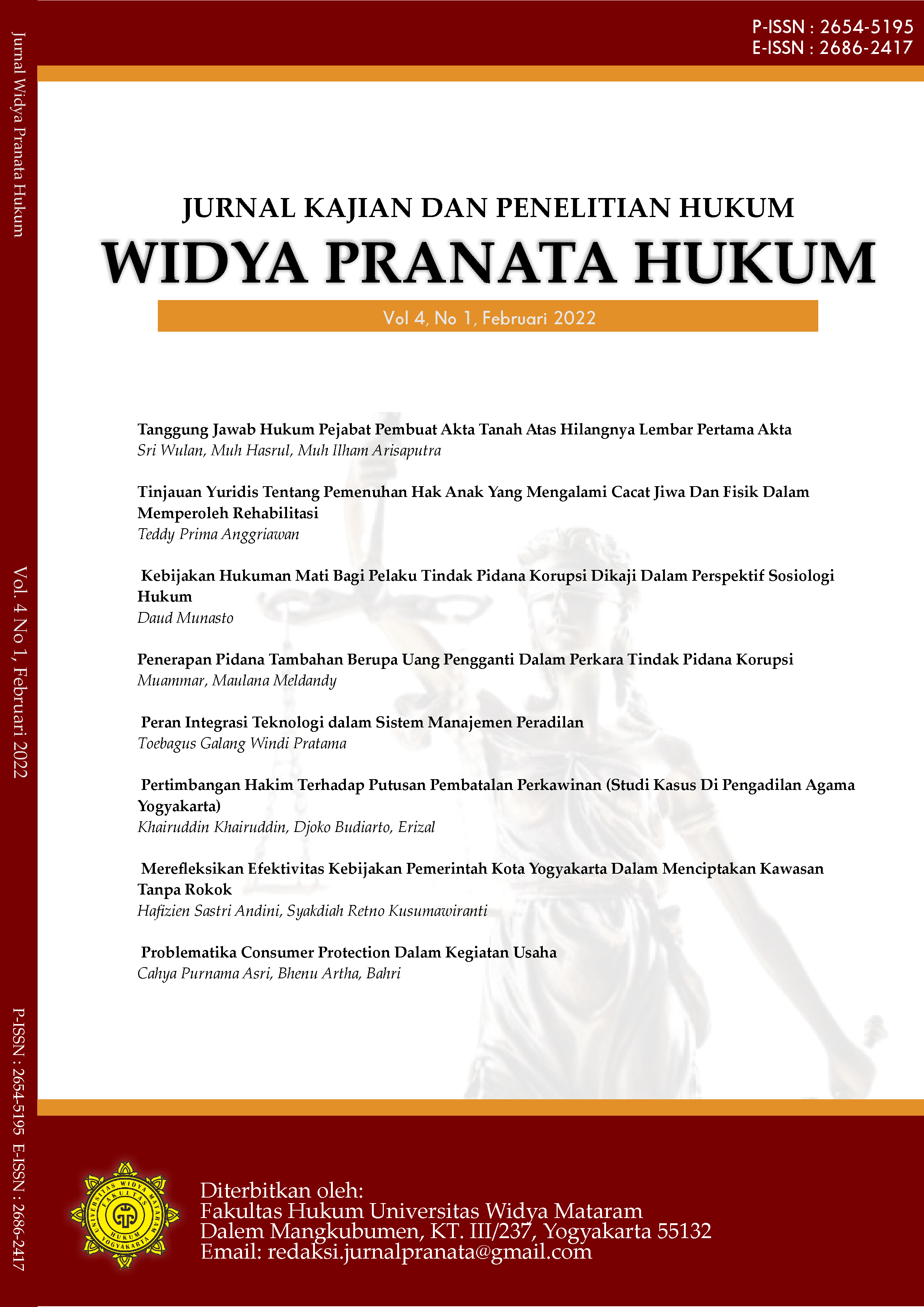
Application Of Supplementary Penalty As A Substitute For Money In Cases Of Corruption Criminal Proceedings
DOI:
https://doi.org/10.37631/widyapranata.v4i1.564Keywords:
Pidana Tambahan, Uang Pengganti. KorupsiAbstract
Abstract
The determination of additional punishment in the form of "replacement money" should ideally be equal or balanced with state financial losses as a result of criminal acts of corruption. Interesting in the decision of the Semarang District Court Number: 32/Pid.Sus/2012/PN.Tipikor.smg there is an unequal determination of "replacement money" when compared to state financial losses caused by criminal acts of corruption committed by the defendant in the "Budget" corruption case. Maintenance of Motorized Service Vehicles by the Chairperson of the Regional Legislative Council of Grobogan Regency for the 2009-2014 period”. This type of normative legal research with a normative juridical approach examines library materials in the form of books, magazines and legislation that correlates with the discussion of the problem. Regarding the legality of additional criminal charges in the form of substitute money in corruption cases, it is stated in Article 18 paragraph (1) letter b of Law no. 31 of 1999 concerning the Crime of Corruption, namely "payment of compensation as much as possible equal to the property obtained from the crime of corruption". The judge's consideration in the decision above is concluded to be less relevant if it is associated with additional penalties in the verdict in the form of replacement money.
Keywords: corruption; replacement money; supplementary penalty
References
Emerson Yuntho, dkk. Penerapan Unsur Merugikan Keuangan Negara dalam Delik Tindak Pidana Korupsi. (Jakarta: Indonesia Corruption Watch, 2014).
Hernold Ferry Makawimbang, Kerugian Keuanga Negara, Dalam Tindak Pidana Korupsi, Suatu Pendekatan Hukum Progresif (Yogyakarta: Thafa Mediia, 2014)
H. Abdul Latif, Hukum Administrasi: Dalam Praktik Tindak Pidana Korupsi, (Jakarta: RajaGrafindo Persada, 2011)
H. Jawade Hafidz Arsyad, Korupsi dalam Persektif Hukum Administrasi Negara, (Jakarta: Sinar Grafika, 2013)
Kamus Hukum, Fockema Andreae. (Bandung: Bina Cipta, 1983) huruf c. Terjemahan Bina Cipta.
Lilik Mulyadi, 2007, Putusan Hakim dalam Hukum Acara Pidana – Teori, Praktik, Teknik Penyusunan, dan Permasalahannya, (Bandung: Cetakan Pertama, PT. Citra Aditya Bakti)
Jur. Andi Hamzah, Pemberantasan Korupsi; Melalui Hukum Pidana Nasional dan Internasional. (Jakarta: RajaGrafindo Persada, 2014.
Johnny Ibrahim, Teori dan Metodologi Penelitian Hukum Normatif, Malang, Banyumedia, 2010.
Peter Mahmud Marzuki, Penelitian hukum, Edisi Revisi, Jakarta, Kencana, 2005.
Sudikno Mertokusumo, Mengenal Hukum, Suatu Pengantar. (Yogyakarta: Liberty, 2007)
Poerwadarminta, Kamus Umum Bahasa Indonesia. 1976.
Putusan Nomor : 32/ Pid.Sus/ 2012/ PN.Tipikor.Smg
R. Wiyono, Pembahasan Undang-Undang Pemberantasan Tindak Pidana Korupsi, (Jakarta: Sinar Grafika, 2008)
K.C Wheare F.B.A, Modern Constitution, London, Oxford University Pers, 1975.
Roni Sulistyanto Luhukay, Indenpendensi Kekuasaan Kehakiman Pasca Amandemen Uud 1945 Dan Relevansinya Bagi Penegakan Hukum Berkeadilan, Jurnal Jurisprudentie Uin Alauddin Makassar, Volume 6 No 1 Juni 2019.
Roni Sulistyanto Luhukay Pemenuhan Jaminan Kesehatan Oleh Perusahaan Dalam Perpektif Peraturan Pemerintah Nomor 86 Tahun 2013, Jurnal Ilmiah Living Law E-Issn 2550-1208 Volume 13 Nomor 2, Juli 2021.
Suhendar, Konsep Kerugian Kuangan Negara, (Malang: Setara Press)
Undang-Undang No. 31 Tahun 1999, tentang Pemberantasan Tindak Pidana Korupsi
Wasis SP. Pengantar Ilmu Hukum. (Malang: UMM Pres, 2002)
Downloads
Published
Issue
Section
License
Copyright (c) 2022 Widya Pranata Hukum : Jurnal Kajian dan Penelitian Hukum

This work is licensed under a Creative Commons Attribution-ShareAlike 4.0 International License.
Jurnal Widya Pranata Hukum allows readers to read, download, copy, distribute, print, search, or link to the full texts of its articles and allow readers to use them for any other lawful purpose. The journal allows the author(s) to hold the copyright without restrictions. Finally, the journal allows the author(s) to retain publishing rights without restrictions

This work is licensed under a Creative Commons Attribution-ShareAlike 4.0 Generic License.